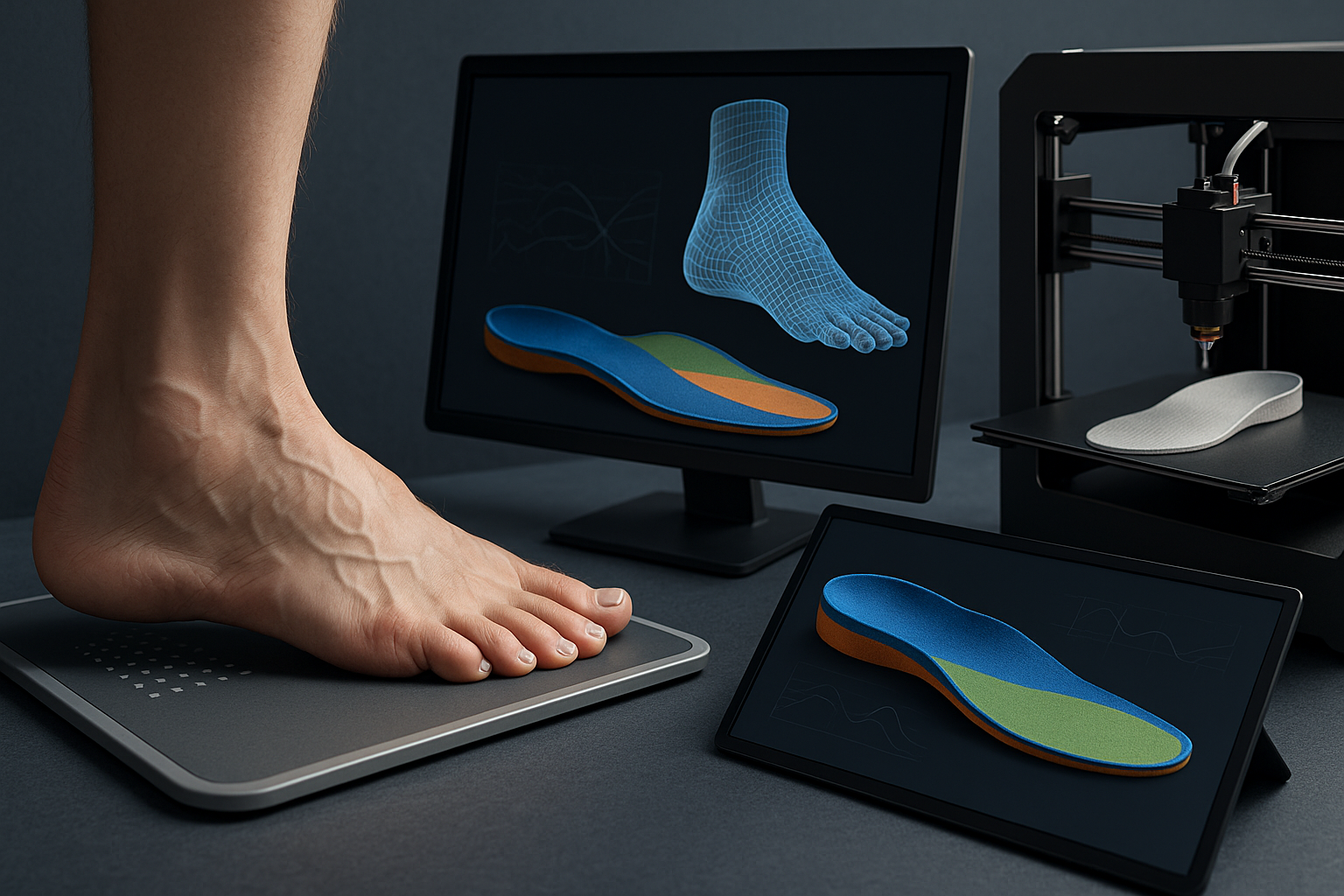
Orthotic care has long relied on artisan craftsmanship—manual molding, foam impressions, and hands-on experience passed down through generations. But as the number of people with foot and ankle disorders grows and healthcare costs continue to climb, traditional methods no longer meet modern needs. To provide fast, affordable, and personalised solutions at scale, the orthotics industry must evolve. Enter the digital age—where algorithms, 3D scanners, and data-driven design promise a revolution in how we restore mobility and quality of life.
The Legacy of Handcrafted Orthotics
For decades, orthotic devices like ankle-foot orthoses (AFOs), insoles, and braces have been made by hand. A specialist evaluates the patient, takes measurements or impressions, and uses plaster or foam to create a mold. The orthosis is shaped, cut, fitted, and adjusted—a process that often takes weeks and multiple appointments.
While experienced clinicians and technicians can produce excellent outcomes, this traditional process is:
- Time-consuming – Custom orthotics may take 2–6 weeks to deliver.
- Labor-intensive – Every pair must be made from scratch.
- Difficult to scale – Quality and fit can vary by technician.
- Costly – Manual labor, materials, and time all add up.
These inefficiencies are no longer sustainable, especially when over 200 million Europeans live with disabling foot and ankle conditions. Orthotic care must be reimagined to serve the growing demand.
Digital Transformation Begins with Data
The journey from workshop to algorithm starts with better data collection. Thanks to technological advances, capturing the exact shape and function of a patient’s foot is now faster and more precise than ever.
Key tools include:
- 3D Scanning: Captures high-resolution models of the foot and ankle in seconds. No plaster, no foam.
- Pressure Sensors and Gait Analysis: Measures walking patterns, pressure points, and weight distribution.
- Patient History and Biomechanical Data: Collected via digital health platforms to inform better designs.
All of this data feeds into computer-aided design (CAD) software, which automatically generates orthotic models tailored to the user’s anatomy and condition. These designs can be adjusted in real time and even tested virtually before manufacturing.
From Design to Delivery: Fast, Flexible Fabrication
Once a digital design is ready, it moves straight to production using advanced manufacturing techniques. This includes:
- 3D Printing (Additive Manufacturing): Allows the orthosis to be printed layer-by-layer using thermoplastics or flexible polymers. It’s ideal for fast prototyping and one-off production.
- CNC Milling: Uses computer-controlled cutters to carve orthoses from solid blocks of material, ensuring precision and repeatability.
- Injection Molding with Modular Adjustments: For higher-volume needs, this method combines speed with consistent quality.
Compared to traditional fabrication, digital manufacturing offers numerous benefits:
- Rapid production – Devices can be made in hours or days.
- Greater accuracy – Designs match exact anatomical scans.
- Repeatability – Identical replacements can be produced on demand.
- Lower waste – Material usage is more efficient and sustainable.
Personalisation Meets Performance
Orthotic design is no longer about generic templates or rough molds. Thanks to software modeling and digital tools, devices can now be optimised for both form and function.
Here’s how personalised digital orthotics enhance performance:
- Anatomical precision: Devices conform exactly to the user’s foot shape.
- Targeted support: Designs consider pressure distribution and gait analysis.
- Lightweight and ergonomic: Materials and shapes are tailored for comfort and mobility.
- Custom stiffness zones: Specific areas can be made stiffer or more flexible to suit movement needs.
What’s more, adjustments are easier. If the patient’s condition changes, their digital file can be modified quickly without starting from scratch—reducing time, effort, and costs.
Toward a Smarter, Scalable Orthotics Future
The ultimate goal is not just better orthoses—it’s a better system of care. With digital tools, clinicians can streamline the entire treatment pathway, from initial evaluation to delivery and long-term follow-up. This unlocks several strategic advantages:
- Faster treatment cycles – Patients wait less and recover faster.
- Improved outcomes – Custom-fit devices reduce complications and pain.
- Healthcare savings – Reduced labor and waste lead to lower costs.
- Scalability – Systems can be deployed across clinics, hospitals, and remote settings.
One such effort is the A-FOOTPRINT project, which aims to bring these benefits into widespread clinical use. By combining digital design, manufacturing innovation, and clinical insight, it’s setting a new standard for orthotic care in Europe and beyond.
In conclusion, digital orthotics represent a critical shift from tradition to technology. No longer bound by slow, manual methods, healthcare providers can now deliver faster, cheaper, and more effective care to millions in need. From workshops to algorithms, the future of mobility is being built—one scan, one design, and one step at a time.