
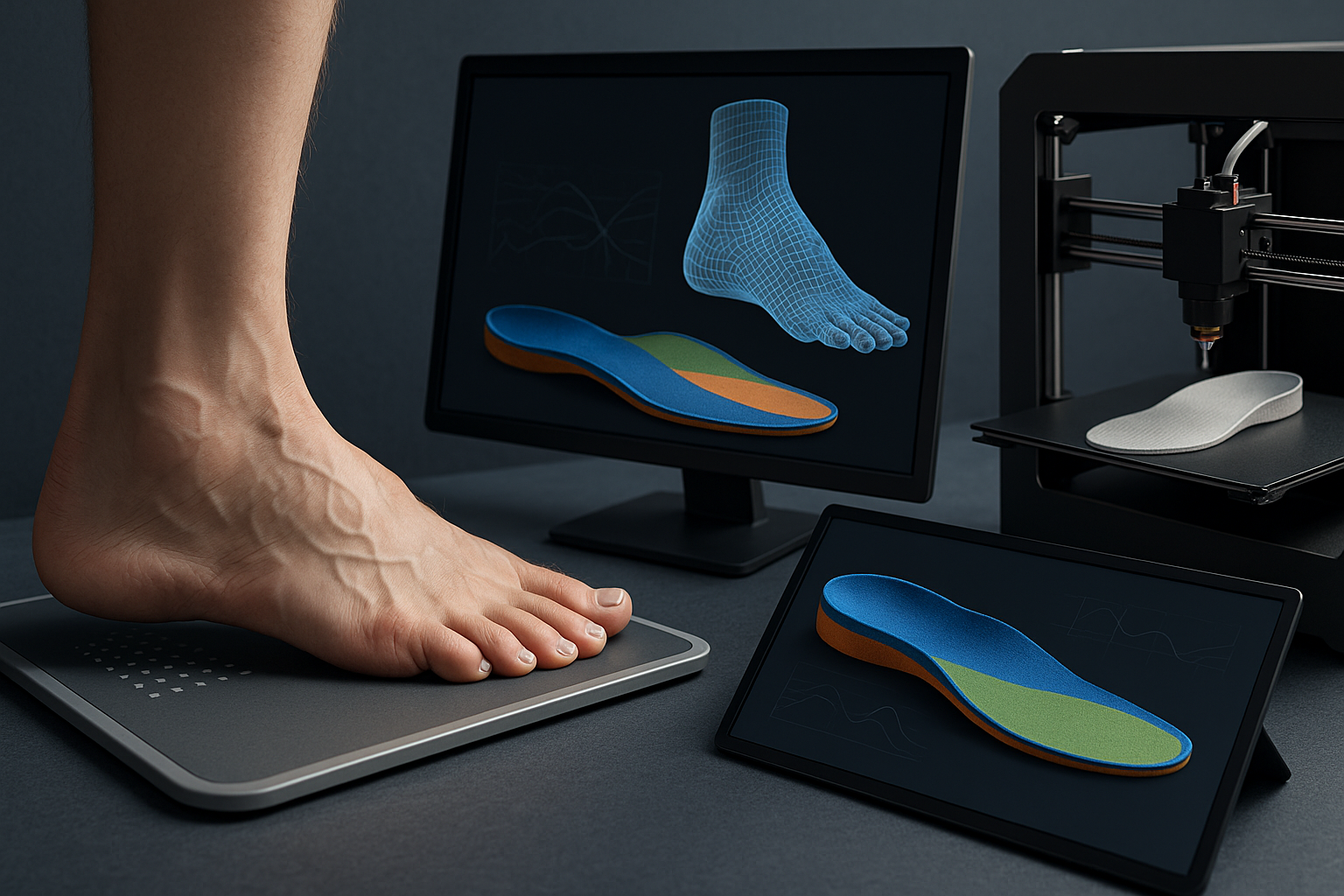
In the realm of healthcare, personalised treatment has become the gold standard—and orthotics is no exception. For millions suffering from foot and ankle problems, off-the-shelf solutions often fall short. Their conditions demand more than one-size-fits-all devices. The future of orthotic care lies in personalisation: custom-fit solutions tailored to an individual’s anatomy, biomechanics, and lifestyle. Thanks to digital technologies, that future is not just possible—it’s already here.
The Problem with Generic Orthoses
Many patients are still prescribed generic insoles or braces that offer only partial relief. While these products can provide temporary support, they are not designed to correct specific misalignments or support the unique contours of an individual’s foot. As a result:
- Pain and discomfort often persist.
- Improper support can lead to further complications in the knees, hips, and spine.
- Patient satisfaction and long-term adherence drop significantly.
Even in cases where custom orthoses are provided, traditional methods like plaster casting are slow, costly, and often inaccurate. There is a growing need for orthotic devices that are both truly customised and quickly available.
The Role of Advanced Scanning and Gait Analysis
The new generation of personalised orthoses begins with precision data capture. Technologies such as 3D foot scanners and motion capture systems allow clinicians to understand each patient’s needs in incredible detail.
Key steps in this process include:
- 3D Foot Mapping: Scanners capture the exact shape, size, and arch structure of the foot in both weight-bearing and non-weight-bearing positions.
- Pressure Plate Analysis: Measures how weight is distributed across the foot during standing and walking.
- Gait Monitoring: Tracks how a person moves, including stride length, symmetry, and pronation/supination tendencies.
This data forms the foundation of a personalised orthotic design, providing insights that were previously impossible to obtain with manual methods.
Digital Design: From Footprint to Function
Once high-precision data is collected, it is processed using computer-aided design (CAD) software. This allows for orthoses that are not just anatomically correct, but also biomechanically optimised. The result is a device that supports how a person actually walks—not just how their foot looks when standing still.
Designers can:
- Adjust cushioning zones for high-pressure areas.
- Reinforce specific regions to control motion.
- Create varying densities across the orthosis to match different activity levels (e.g., walking vs. running).
This level of personalisation means each device serves not only as a support tool, but as a targeted solution for injury prevention, pain relief, and performance enhancement.
Customisation Beyond the Clinic: Tailoring to Lifestyle
True personalisation also considers the patient’s lifestyle, not just their biomechanics. For example:
- A runner may require a more durable and flexible design.
- An elderly patient might need a lightweight orthosis for balance and stability.
- A person with diabetes will benefit from extra protection against skin breakdown.
Modern orthotic solutions can be adapted accordingly, offering different materials, finishes, and flexibility levels. Patients can also choose between discreet designs that fit everyday footwear or more robust braces for intensive medical use.
This user-centered approach increases compliance, satisfaction, and treatment success rates. It turns the orthotic device from a burdensome aid into a natural extension of the patient’s body and lifestyle.
The A-FOOTPRINT Vision: Personalisation at Scale
The A-FOOTPRINT project embodies this new philosophy of scalable personalisation. Its goal is to make custom ankle-foot and foot orthoses widely available, fast to produce, and affordable—without compromising quality.
Using digital pipelines, A-FOOTPRINT enables:
- Rapid 3D scanning for clinical or at-home use
- AI-assisted design models that automatically adapt to individual needs
- On-demand manufacturing via 3D printing and CNC milling
- Reproducible files for consistent follow-up care or remote delivery
This means that patients in rural or under-resourced areas can access the same quality of care as those in major hospitals. It also allows clinicians to iterate faster, reduce human error, and deliver better outcomes with fewer resources.
Conclusion: A Future That Fits
As medicine moves toward greater personalisation, orthotics must follow. Generic devices simply cannot meet the complex and varied needs of patients dealing with mobility-limiting conditions. Customised, digitally designed orthoses offer a better fit—both literally and figuratively.
They relieve pain more effectively, improve mobility, and empower people to return to their daily lives with confidence. And with projects like A-FOOTPRINT leading the way, this once-niche approach is poised to become the standard of care across Europe and beyond.
The future of orthotics isn’t just about technology—it’s about people. And the best solutions are the ones that fit them perfectly.


