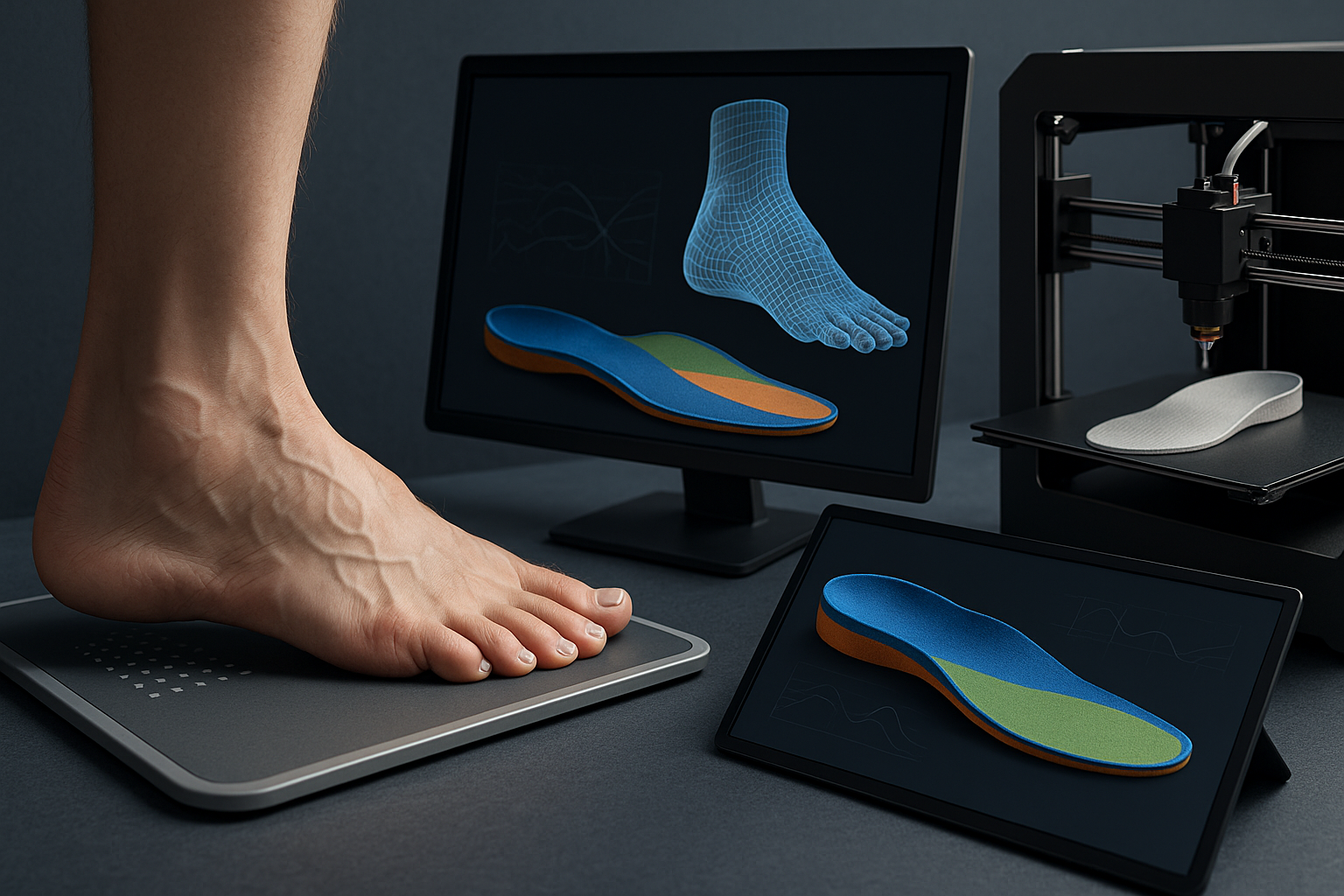
Orthotic care is evolving rapidly. As healthcare systems face increasing pressure to deliver effective treatment faster and more affordably, traditional orthoses manufacturing is being reimagined. The challenge? Getting high-quality, personalised foot and ankle orthoses to patients quickly, without sacrificing performance or precision. The solution lies in combining digital design, rapid manufacturing, and scalable systems—a mission central to the A-FOOTPRINT project.
Why Speed Matters in Orthotic Care
When someone is in pain or struggling to walk, time is not a luxury—it’s a critical factor in recovery. Delays in receiving custom orthotic devices can result in:
- Worsening symptoms due to prolonged imbalance or strain
- Loss of productivity and mobility
- Higher costs from repeat appointments and interim solutions
- Increased risk of long-term complications, especially for diabetic patients
Traditional orthotic production methods often take 3 to 6 weeks. This includes waiting for appointments, casting, design, fabrication, fitting, and adjustments. For many, this timeline is simply too long.
A Digital Leap: How Technology Accelerates Production
Speeding up the orthoses supply chain starts with technology. A-FOOTPRINT integrates a fully digital workflow from assessment to delivery, eliminating bottlenecks at every step.
Key technologies driving speed:
- 3D Scanning: Foot shape and dimensions captured instantly, no need for plaster molds.
- Automated CAD Software: Generates tailored orthotic models in minutes based on gait and anatomy data.
- 3D Printing and CNC Milling: Produce the final orthosis directly from digital files with minimal human intervention.
This seamless process not only accelerates delivery but also reduces errors, allowing for faster fitting and fewer remakes.
Streamlined Clinical Pathways
Traditional orthotic services often require multiple clinic visits for assessment, fitting, and follow-ups. A-FOOTPRINT introduces a streamlined approach where digital assessments can even be performed remotely.
Benefits include:
- Fewer in-person visits, saving time for both patients and practitioners
- Remote diagnostics through smartphone-integrated scanning apps or clinic-based pressure mapping systems
- Cloud-based patient records, making it easier to revise or reorder devices instantly
This level of efficiency is especially valuable in rural areas or overburdened health systems, allowing care to reach more people faster.
Balancing Speed with Functionality
While speed is important, orthotic devices must still be durable, supportive, and tailored to individual biomechanics. A-FOOTPRINT achieves this by integrating functional performance testing during the design stage.
Features such as:
- Variable stiffness zones based on gait data
- Cushioning optimised for high-pressure points
- Anatomical contouring for precise fit and comfort
…are all built into the digital design process. This means orthoses aren’t just fast—they’re effective, reducing pain and improving mobility with greater consistency than manual fabrication.
Scalable for the Future: Meeting Rising Demand
The need for orthotic devices is growing fast—driven by aging populations, increased diabetes prevalence, and post-stroke mobility challenges. To keep up, the orthoses industry must be ready to scale.
A-FOOTPRINT addresses this through:
- Reusable digital templates for patients, enabling rapid reorder or adjustments
- Centralised manufacturing hubs supported by cloud-based order management
- Compatibility with multiple production methods (e.g., 3D printing, modular manufacturing)
This scalable infrastructure ensures that as demand rises, supply remains fast and reliable—without compromising on quality.
Environmental and Economic Advantages
Rapid production also brings unexpected benefits for sustainability and cost control. Faster processes mean:
- Reduced material waste thanks to additive manufacturing
- Less transport of molds and materials between facilities
- Lower overall costs per device due to automation and time savings
The end result is a system that’s better for the planet, more affordable for health services, and more accessible for patients.